As Swami Solar expanded its solar installations across 9 buildings spread over a 1.8 km campus, managing and monitoring the entire system became increasingly challenging. Each building operated independently, making it difficult for the operations team to get a complete picture of overall plant performance.
PRODUCT CAPABILITIES
Dyulabs WRMS — Deployment Configuration for Swami Solar
Feature
Product
Project Type
Deployment Architecture
Site Coverage
Data Sources
Communication Model
Alerts & Notifications
Reporting
Scalability
Details
aALoK Solar Monitoring System
Distributed Multi-Building Solar Monitoring
1 Master Device + 8 Child Devices
9 Buildings Across 1.8 km Area
9 Inverters, 9 MFMs, 1 Weather Monitoring Station
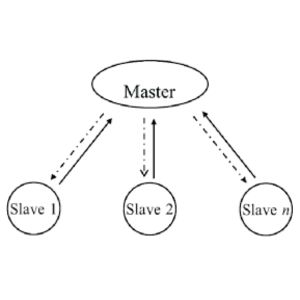
Master-Child Architecture
Fault, Communication & Performance Alerts
Generation, Energy & Performance Reports
Additional Buildings & Devices Can Be Added Easily
Dyulabs deployed 1 aALoK Master and 8 aALoK Child Devices to connect solar assets across a 1.8 km site, enabling centralized monitoring from a single dashboard.
Reduced Communication Cost
Instead of extensive communication cabling across multiple buildings, the aALoK architecture minimized wiring requirements, significantly reducing installation complexity and cable costs.
Complete Plant Visibility
Integrated 9 Inverters, 9 MFMs, and 1 Weather Monitoring Station into the aALoK platform, providing real-time generation, energy, and weather insights from one centralized interface.
Scalable Deployment
The modular Master-Child architecture allows additional buildings and solar assets to be added without major infrastructure changes, ensuring long-term scalability.
Development & Deployment Timeline
1 → Site Survey & Requirement Analysis ⬇ 2 → Communication Architecture Design & Device Planning ⬇ 3 → Installation of 1 aALoK Master & 8 aALoK Child Devices ⬇ 4 → Integration of 9 Inverters, 9 MFMs & 1 WMS ⬇ 5 → Communication Network Configuration & Testing ⬇ 6 → Dashboard Setup & Data Mapping for 9 Buildings ⬇ 7 → System Validation, Performance Testing & Commissioning ⬇ Go-Live → Unified Monitoring of All 9 Buildings on a Single aALoK Dashboard
SOLUTION COMPARISON
Parameter
Site Coverage
Communication Infrastructure
Installation Cost
Deployment Complexity
Monitoring Interface
Data Visibility
Scalability
Maintenance Effort
Fault Detection
Operational Efficiency
Conventional Monitoring Solution
✕ Challenging for distributed sites
✕ Extensive communication cabling required
✕ High due to cable, trenching, and labor costs
✕ Complex installation and routing
✕ Multiple monitoring points or dashboards
✕ Fragmented plant data
✕ Additional buildings require more cabling
✕ Higher due to long cable runs
✕ Time-consuming and decentralized
✕ Limited visibility across multiple locations
Dyulabs aALoK Monitoring Solution
✔ Seamlessly covers 9 buildings across 1.8 km
✔ Master-Child architecture minimizes cabling
✔ Significantly reduced infrastructure cost
✔ Simplified deployment with distributed devices
✔ Single unified dashboard
✔ Centralized view of all solar assets
✔ Easy expansion by adding Child devices
✔ Lower maintenance requirements
✔ Real-time alerts and centralized fault tracking
✔ Complete plant visibility from one platform
We successfully deployed aALoK Solar Monitoring System for Swami Solar, connecting 9 buildings spread across a 1.8 km area through a master-child architecture. By integrating 9 inverters, 9 MFMs, and 1 Weather Monitoring Station into a single dashboard, the solution provided centralized visibility, reduced communication infrastructure costs, and improved operational efficiency. The project demonstrates how aALoK enables scalable and cost-effective monitoring for distributed solar installations.