
Slash Your Electricity Bill by 90%: A Clear Guide to Residential Solar
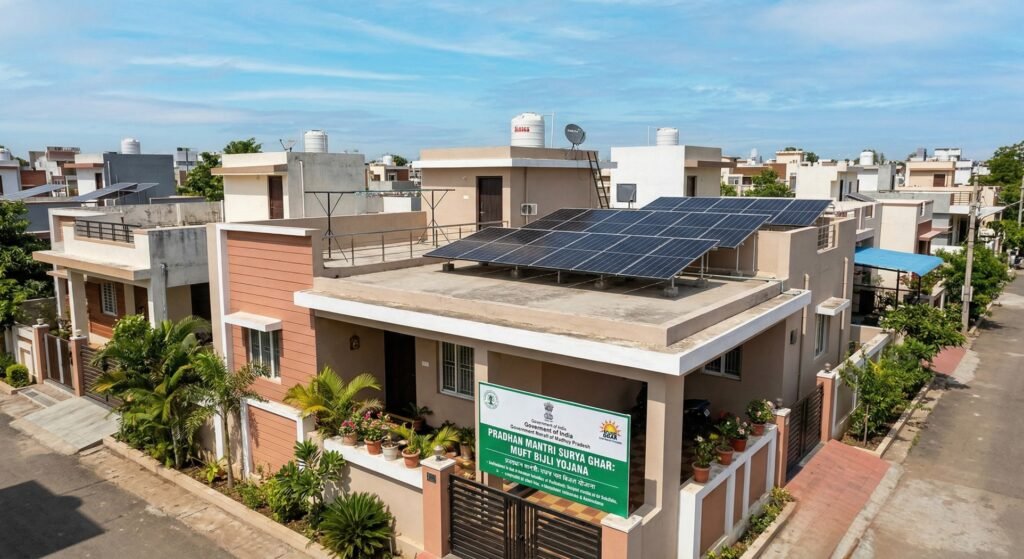
This guide organizes everything you need to know about residential solar—from the financial impact to the specific setup that fits your home—into one clear, scannable resource.
Part 1: The Financials (How Much You Save)
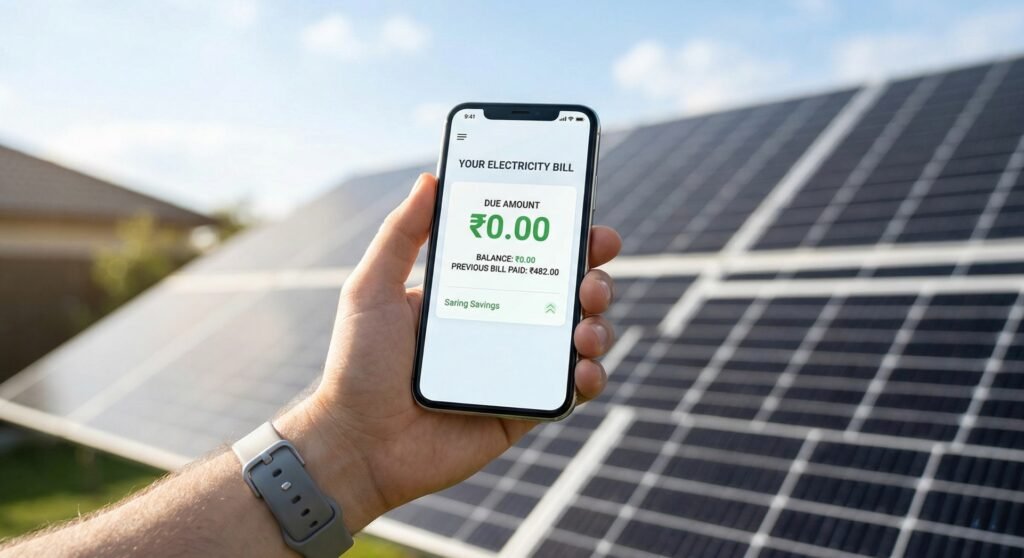
A residential solar system typically reduces your electricity bill by 70% to 90%. Here is the breakdown of the value:
- Monthly Savings: A standard 3kW system generates about 360–400 units (kWh) per month. If your bill is currently 450 units, solar covers nearly 85% of your usage.
- The Payback Period: In most regions, the savings on your bill will cover the total cost of the system in 4 to 5 years.
- Long-Term Profit: Panels are warrantied for 25 years. Once the system is paid off, you get roughly 20 years of free electricity.
- Subsidies: Many governments (including India’s PM-Surya Ghar scheme) offer 40% or more in subsidies, making the initial investment even lower.
Part 2: Finding Your “Solar Persona”
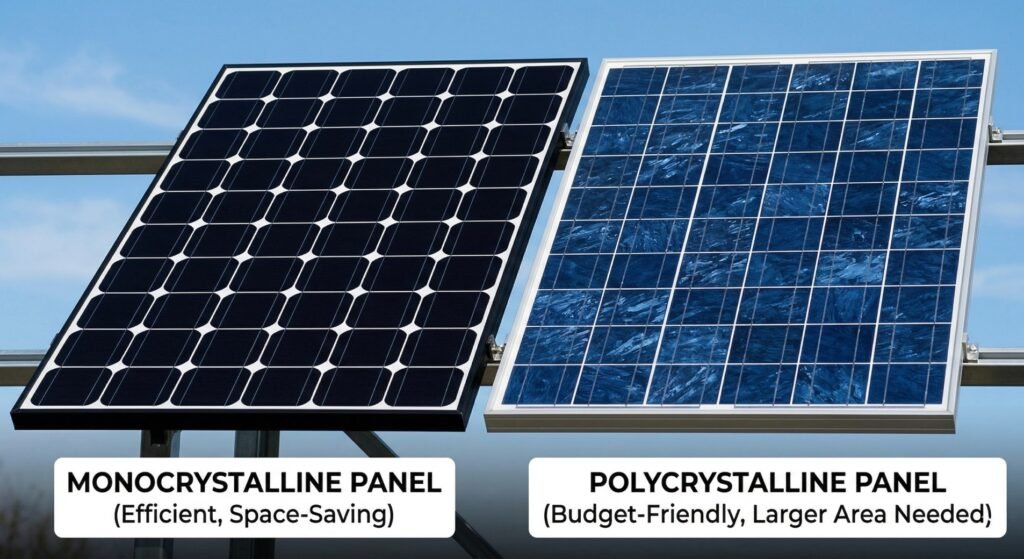
Match your home type and lifestyle to the right technology.
1. The “Standard Homeowner”
- Home Type: Independent house/bungalow with a clear roof and a stable power grid.
- System Type: Grid-Tied (On-Grid).
- Technology: Monocrystalline Panels (Best for efficiency/limited space).
- Why: It is the cheapest option. You don’t buy batteries; the grid acts as your storage. When you overproduce, your meter spins backward, giving you credits.
2. The “Reliability Seeker”
- Home Type: Houses in areas with frequent power cuts (1–3 hours daily).
- System Type: Hybrid System.
- Technology: Monocrystalline Panels + Lithium Battery.
- Why: A standard grid-tied system shuts off during a power cut for safety. A Hybrid system keeps your Wi-Fi, lights, and fridge running during a blackout while still saving you money on your bill.
3. The “Challenged Roof”
- Home Type: Homes with shadows from tall trees or neighboring buildings.
- System Type: On-Grid with Micro-Inverters.
- Technology: Micro-Inverters (
One per panel). - Why: In normal systems, if one panel is in the shade, the whole system slows down. Micro-inverters let each panel work independently, maximizing power even in partial shade.
4. The “Renter or Apartment Resident”
- Home Type: You don’t own the roof or live in a high-rise.
- System Type: Community Solar.
- Technology: N/A (Shared off-site farm).
- Why: You “subscribe” to a solar farm nearby. You don’t install anything, but you receive a discounted electricity bill based on your subscription.
Summary Checklist: Which is for you?
| Feature | Grid-Tied | Hybrid | Off-Grid |
|---|---|---|---|
| Best For | Maximum Savings | No Blackouts | Remote Areas |
| Upfront Cost | Lowest | Medium-High | Highest |
| Battery Needed? | No | Yes (Small/Medium) | Yes (Large) |
| Maintenance | Almost Zero | Low | High |
| Net Metering? | Yes | Yes | No |
Action Plan: 3 Steps to Start
- Check your Bill: Look for your “Units Consumed” (kWh) per month.
- Size it Up: Every 1kW of solar needs about 100 sq. ft. of shadow-free roof area.
- Get a Quote: Look for an installer who uses Tier-1 Monocrystalline panels to ensure your 25-year investment lasts.
