
How many yoga mats are purchased daily in India and how it is affecting India’s Net Zero
1. How Many Yoga Mats are Purchased Daily?
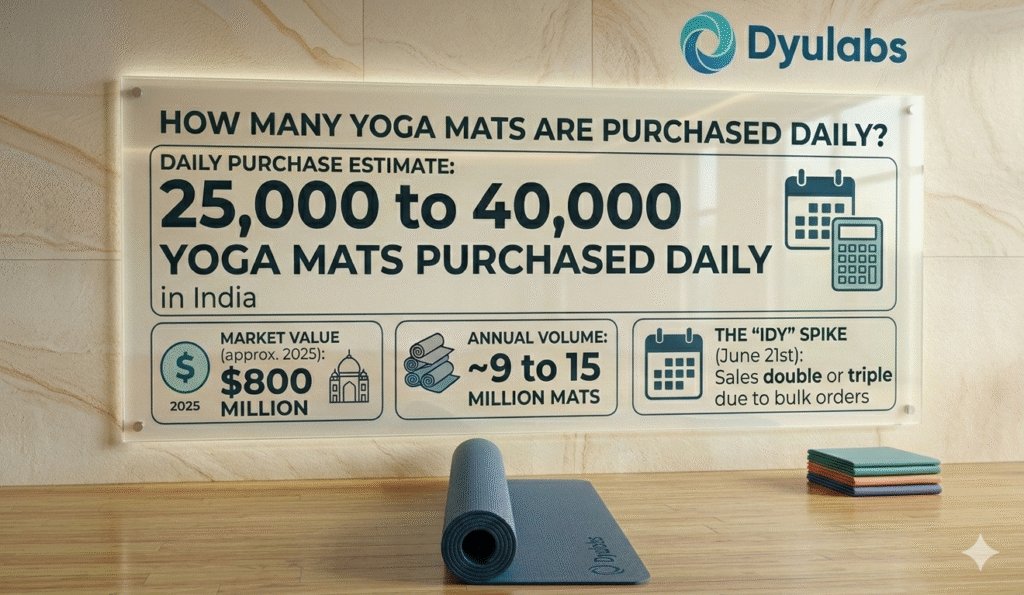
Based on current market valuations for India’s yoga accessories (approx. $800 million in 2025) and global sales volume, we can estimate the following:
-
Annual Sales: India accounts for roughly 3% to 5% of the global yoga equipment market. With over 300 million mats sold globally each year, India’s share is likely between 9 million and 15 million mats annually.
- Daily Purchase Estimate: This averages out to roughly 25,000 to 40,000 yoga mats purchased every single day across India.
- The “IDY” Spike: Sales traditionally skyrocket in the weeks leading up to the International Day of Yoga (June 21st), where government and corporate bulk orders can double or triple these daily averages.
2. Why is this Harmful to the Environment?
The environmental cost of a yoga practice often depends on the mat’s material. Most affordable mats in India are made of PVC (Polyvinyl Chloride) or NBR (Nitrile Butadiene Rubber).
A. These are Non-Biodegradable
Most cheap mats are essentially plastic.
- Landfill Legacy: A standard PVC mat can take up to 1,000 years to decompose.
- Microplastics: As mats wear down from use, they shed tiny plastic particles (microplastics) that enter our water systems and soil.
B. Production & Disposal Are Extremely Toxic
- Dioxins: The manufacturing of PVC releases dioxins, which are highly toxic persistent organic pollutants (POPs).
-
Phthalates: To make PVC flexible, manufacturers add phthalates. These can “off-gas” (that “new mat” smell), which is not only bad for the air but also linked to hormonal disruptions in humans.
- Burning Hazard: In many parts of India, waste is managed through open burning. If a PVC mat is burned, it releases hydrochloric acid gas and toxic chemicals into the air.
C. Resource Intensity
-
Petroleum-Based: PVC and synthetic rubbers are derived from oil, contributing to carbon emissions and fossil fuel depletion.
- Chemical Runoff: The dyes and foaming agents used to give mats their color and “squish” often end up in local waterways during the manufacturing process.
3. How To Contribute For Net Zero
India actually leads the way in eco-friendly alternatives that are becoming more popular in urban centers:
| Material | Environmental Impact |
|---|---|
| Cotton / Khadi | Biodegradable, washable, and supports local weavers. |
| Natural Rubber | Tapped from rubber trees; biodegradable and renewable (if sourced sustainably). |
| Cork | Harvested from the bark of trees without cutting them down; antimicrobial and eco-friendly. |
| Jute | A highly sustainable fiber grown extensively in India; fully biodegradable. |
While the daily purchase of tens of thousands of mats is a sign of a healthier population, the reliance on cheap PVC creates a massive long-term waste problem. Investing in a natural fiber or rubber mat might cost more upfront, but it prevents your “Zen” from leaving a centuries-long footprint.
Let’s participate together for Net Zero.
Dyulabs
